What Is Stock Market Simulation?
What is stock market simulation? Learn how risk-free trading with live prices helps beginners test strategies and build confidence fast.
Advertisement

Edited & reviewed by Rishi Mohan
Founder & Editor · Founder & business owner · Updated June 2026
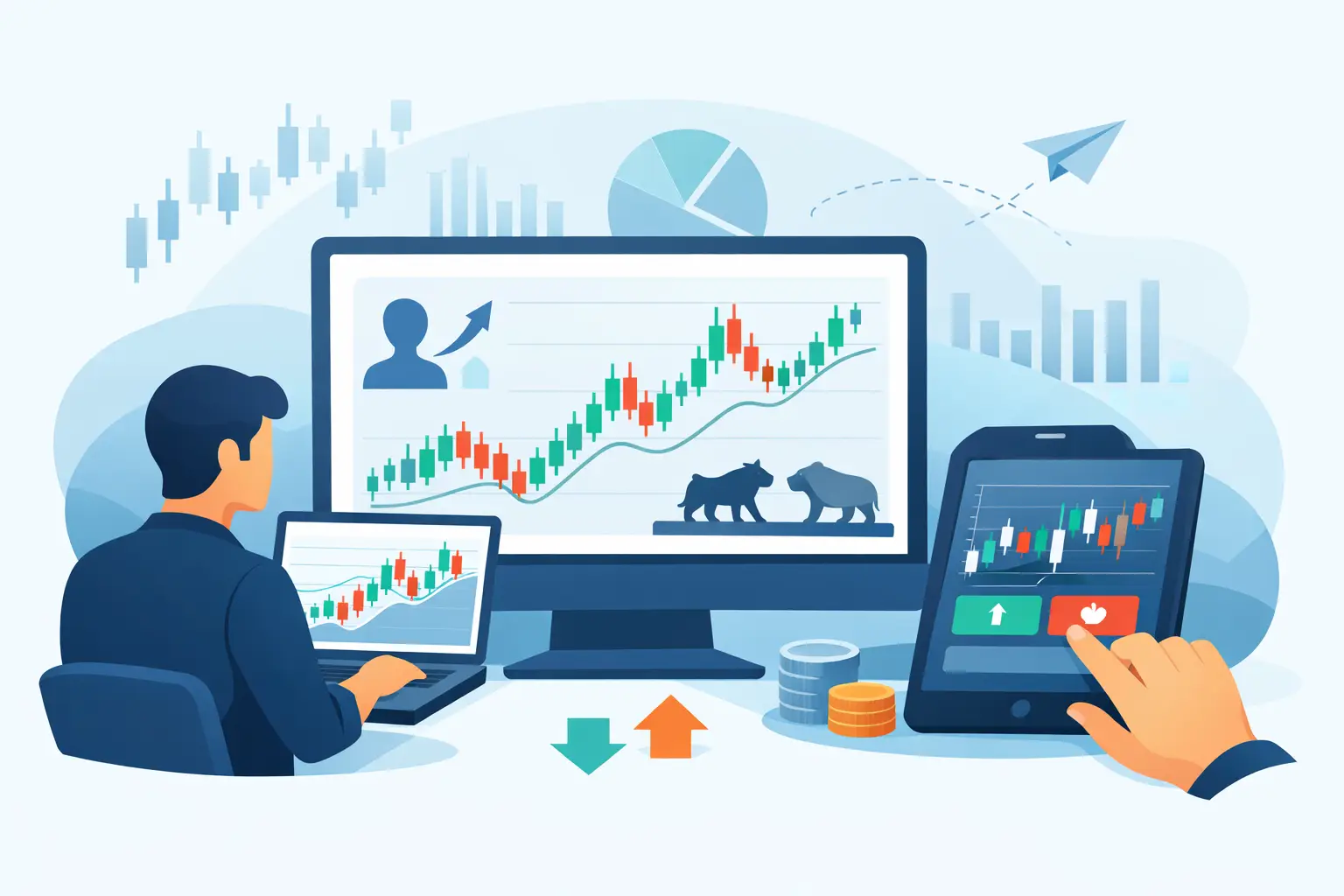
Most new traders do not need more theory. They need one safe place to buy, sell, make mistakes, and see what happens before real money is on the line. That is exactly what stock market simulation is: a risk-free way to practice trading and investing with virtual funds while following real or near-real market conditions.
A stock market simulator mirrors the experience of participating in the market without requiring an actual brokerage deposit. You can place trades, track positions, test timing, and watch portfolio performance move with the market. For beginners, that removes the biggest barrier right away - fear. For more experienced traders, it creates a clean testing ground for new ideas before they go live.
What is stock market simulation in simple terms?
If you have ever wondered what is stock market simulation, the simplest answer is this: it is a practice version of investing. Instead of using your own cash, you use virtual money. Instead of learning only from charts, books, or videos, you learn by doing.
The goal is not just entertainment. A good simulator is designed to help you understand how markets behave, how orders work, and how your decisions affect a portfolio over time. You get hands-on exposure to price movement, volatility, position sizing, and trade management without paying for mistakes with actual losses.
That matters because investing looks easy from the outside. Click buy, wait, make money. Real market behavior is messier. Prices move fast, news changes sentiment, and emotions can push people into bad decisions. Simulation gives you room to experience that pressure in a lower-stakes environment.
How a stock market simulator works
Most stock market simulation platforms start you with a virtual account balance. From there, you can choose stocks, and sometimes other assets like crypto, then place trades based on live prices or delayed market data. As the market moves, your virtual portfolio rises or falls just like a real one would.
The useful part is not the fake balance. It is the realism around it. Strong simulators let you follow live market action, monitor gains and losses in real time, and review your trade history. Some also include AI-powered insights or analytics that help explain what happened and why.
This creates a more practical learning loop. You spot an opportunity, place a trade, track the outcome, and study the result. Over time, patterns become clearer. You start to see whether you are cutting winners too early, chasing momentum too late, or risking too much on one position.
Why people use stock market simulation
The biggest reason is obvious: no financial downside. You can make beginner mistakes without losing rent money, savings, or confidence. That alone makes simulation appealing to first-time investors who want market experience without immediate exposure.
But the value goes beyond protection. Simulation helps people build decision-making habits. You can learn how limit orders differ from market orders, how fast volatility can change a trade, and how a portfolio reacts when several positions move at once. Reading about those things is useful. Seeing them happen in a live environment is better.
It is also a practical tool for intermediate traders. If you want to test a breakout setup, experiment with sector rotation, or compare swing trading against longer holds, simulation gives you a controlled place to do it. You can pressure-test your process before introducing real capital.
For users who want a more active experience, platforms such as Market Navigator make this more dynamic by combining live prices, AI-powered insights, and real-time portfolio tracking in one place. That matters because static paper exercises often miss the pace and feedback loop that make real market practice valuable.
What stock market simulation teaches you
A simulator can teach mechanics quickly. You learn how to enter and exit positions, track performance, and understand the effect of price changes on total account value. That is the baseline.
The deeper benefit is behavioral. Many new traders believe their biggest problem is not knowing what to buy. In reality, it is often poor timing, overtrading, panic selling, or taking oversized positions. Simulation exposes those habits early.
It also teaches risk management, which is where many beginners struggle. If you repeatedly put too much of your account into one trade, the results make that obvious. If you hold losers too long and let small losses become large ones, your performance history will show it. A simulator turns vague lessons into visible outcomes.
There is also educational value in repetition. The more often you watch markets open, react to earnings, drift on low-volume days, or sell off on bad news, the more familiar market behavior becomes. Confidence grows when the environment feels less foreign.
What simulation does not do
This is where trade-offs matter. Stock market simulation is realistic, but it is not identical to live trading.
The biggest difference is psychology. It is easier to stay calm when losses are virtual. The emotional weight of real money changes decision-making, sometimes dramatically. A strategy that looks disciplined in a simulator can become harder to follow in a live account.
Execution can differ too. Depending on the platform, you may not experience every detail of real-world slippage, spreads, or liquidity constraints. For long-term learning, that may not matter much. For short-term active trading, it matters a lot.
There is also a risk of treating simulation like a game. If you take random oversized bets because nothing is at stake, the lesson quality drops fast. The best results come when you treat the simulator like a real account, with rules, position sizing, and a reason for every trade.
Who should use a stock market simulator?
Beginners are the clearest fit. If you are still learning how markets move, how to place trades, or how to manage a portfolio, simulation gives you a fast start without financial pressure.
It also fits financially curious adults who have delayed investing because they do not want to make an expensive first mistake. Instead of waiting until you feel fully ready, you can start practicing now and build familiarity through repetition.
Intermediate traders can benefit too, especially when they want to test a new setup or expand into another asset class. If you understand the basics but want better execution, more consistency, or a way to compare strategies, simulation becomes a useful lab.
How to get real value from stock market simulation
The smartest approach is to treat practice like performance. Use a clear plan. Decide what kind of trader or investor you want to be, define how much you would risk per position, and track why you entered each trade.
Focus on process before profit. A green virtual portfolio feels good, but one lucky week does not prove much. Consistent habits matter more. If your entries are planned, your exits are disciplined, and your position sizes make sense, you are learning skills that transfer.
It also helps to review your results often. Look for repeated mistakes and repeated strengths. Maybe you do well in trending markets but struggle in choppy ones. Maybe you are better at swing trades than same-day moves. Simulation gives you data on yourself, not just on the market.
Is stock market simulation worth it?
For most new market participants, yes. It shortens the gap between curiosity and experience. Instead of standing on the sidelines, you get a way to interact with live prices, test ideas, and build confidence without putting money at risk.
That said, it works best when you know what it is for. It is not a shortcut to instant trading skill, and it cannot fully recreate the emotions of real capital. What it can do is help you learn faster, make cheaper mistakes, and enter live markets with better instincts than you would have otherwise.
If the goal is to become more comfortable with stocks, more disciplined with strategy, and more informed before funding a brokerage account, simulation is one of the most practical places to start. The market does not slow down for beginners, but a risk-free practice environment gives you a chance to catch up before real money enters the picture.
Put it into practice — risk-free
Practice with $100,000 in virtual cash and live market prices.
More from the blog
Paper Trading for Beginners Guide
This paper trading for beginners guide shows how to practice stocks and crypto with live prices, test strategies, and build confidence risk-free.
Paper Trading vs Live Trading Explained
Paper trading vs live trading comes down to risk, emotion, and execution. Learn when to practice, when to go live, and what changes.
How to Use Paper Trading the Right Way
Learn how to use paper trading with live prices, AI-powered insights, and real-time tracking to practice stock and crypto strategies risk-free.
8 Best Paper Trading Platforms
Compare the best paper trading platforms for stocks and crypto. See which tools offer live prices, realistic practice, and better learning.