Stock Trading Simulation Free and Worth Using
Try stock trading simulation free with live prices, AI-powered insights, and real-time tracking so you can practice risk-free and learn faster.
Advertisement

Edited & reviewed by Rishi Mohan
Founder & Editor · Founder & business owner · Updated June 2026
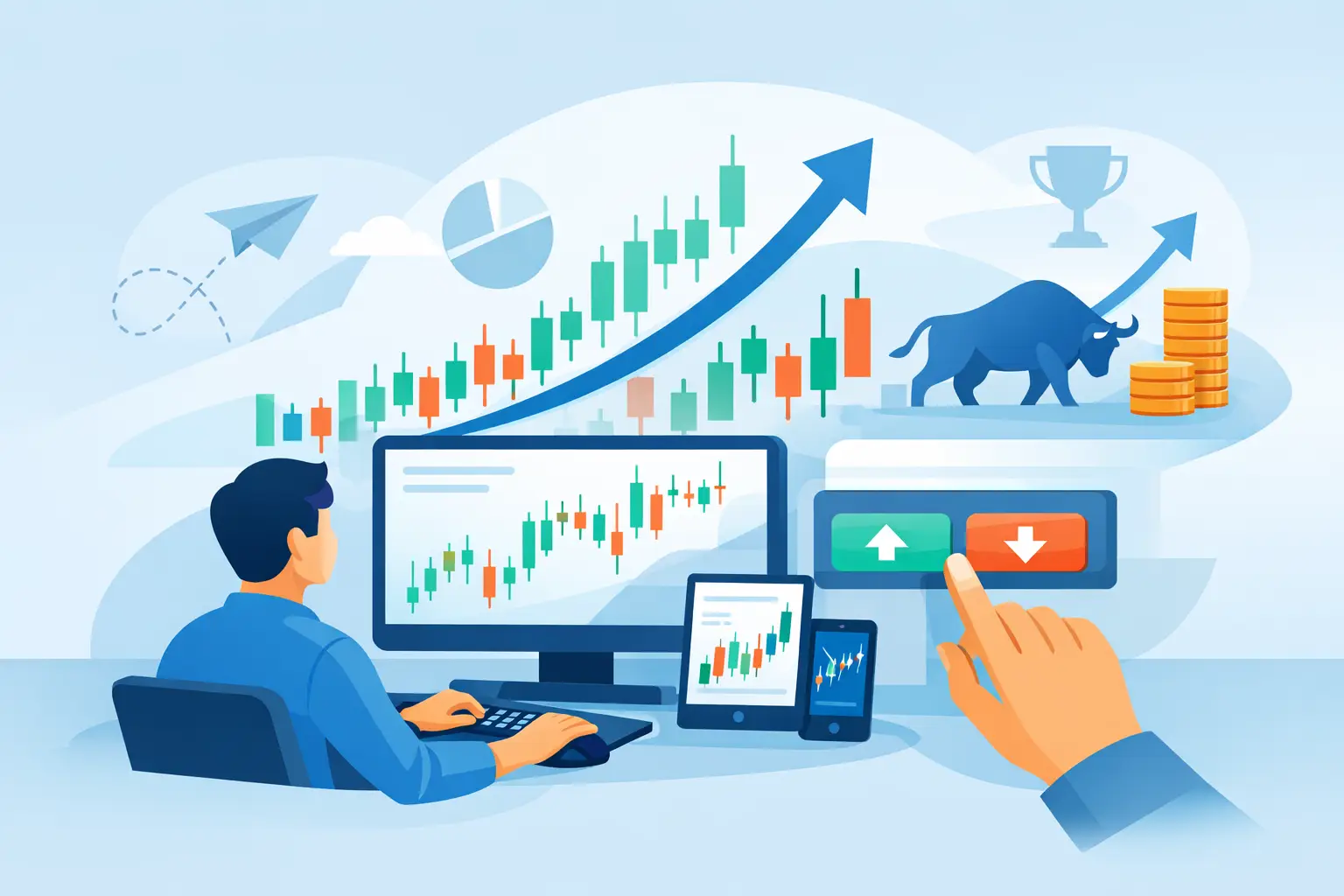
Most beginners do not need more market opinions. They need reps. That is why stock trading simulation free tools matter so much - they let you place trades, track performance, and learn how fast your decisions hold up when prices move in real time.
A good simulator is not just a demo screen with fake numbers. It should feel close enough to live trading that your habits transfer when real money is on the line. If you are learning how to buy your first stock, testing a short-term setup, or figuring out how to manage a mixed stock and crypto watchlist, the right platform gives you a safe place to make mistakes before they become expensive.
Why stock trading simulation free tools work
Reading about trading can help you understand terms, but it does not teach execution. The gap between knowing what a limit order is and actually placing one at the right time is bigger than most people expect. The same goes for position sizing, timing entries, handling volatility, and deciding when to cut a loss.
A free simulator closes that gap because it turns passive learning into active practice. You stop guessing how a strategy might behave and start seeing it play out against live prices. That matters for confidence, but it also matters for discipline. Once you can see your portfolio move in real time, even in a risk-free account, your decision-making gets more honest.
This is where many static paper trading tools fall short. If prices are delayed, the interface is clunky, or the experience feels disconnected from actual market conditions, you learn less than you think. Realism is the point. If the market moves quickly, your simulator should reflect that.
What to look for in a stock trading simulation free platform
The first thing to check is live market pricing. Delayed data can still be useful for basic learning, but it limits your ability to practice timing, momentum, and reaction speed. If your goal is to build trading fluency, live prices make a real difference.
The second is portfolio tracking. You want to see more than a simple profit or loss number. A strong simulator shows how your positions are performing in real time, how concentrated your account is, and how your results change as the market shifts. This is where beginners start to understand risk in a practical way rather than as a textbook concept.
The third is ease of use. If a platform takes too much effort to set up, most new traders will not stick with it. The best experience is immediate. Open the platform, choose an asset, place a trade, and start learning. That low-friction start matters because the biggest barrier for many people is not lack of interest. It is hesitation.
AI-powered insights can also be genuinely useful when they are built to support decisions rather than replace them. New traders often struggle to interpret price action, compare setups, or spot patterns in their own behavior. Smart prompts and trade feedback can shorten that learning curve. They do not make you right automatically, but they can help you ask better questions.
Why risk-free practice matters more than motivation
Plenty of people feel motivated when they first start trading. Motivation is easy on day one. It gets harder after a bad trade, a sudden drop, or a string of impulsive decisions. Risk-free simulation gives you room to learn through those moments without paying tuition to the market.
That matters because losses do not just hit your account. They affect confidence. A new trader who loses money too early often becomes overly cautious or starts chasing quick wins to recover. Neither habit helps. Practicing in a simulator gives you time to build process before emotion starts steering every move.
There is another benefit that does not get enough attention. Simulated trading helps you find out what kind of trader you actually are. You may think you want to day trade, then realize you prefer holding positions for several days. You may assume you can handle fast-moving names, then discover you make better decisions with slower setups. That kind of clarity is hard to get from theory alone.
How beginners should use a free simulator
The smartest approach is not to treat a simulator like a game. Treat it like a training environment. Start small, even with virtual capital. Pick a few stocks or crypto assets, follow them closely, and write down why you entered each trade. If you cannot explain the trade clearly, you probably should not be taking it.
Focus on one skill at a time. One week, practice entries. The next, work on exits. Then spend time on position sizing or managing multiple positions at once. Trying to learn everything at the same speed usually creates noise instead of progress.
It also helps to review your trades regularly. Look for patterns. Did you enter too late after a sharp move? Did you hold losers too long? Did you sell winners early because you got nervous? A simulator becomes much more valuable when you use it to study yourself, not just the market.
Beginners should also avoid the trap of taking wild risks just because the money is not real. That can build habits that fall apart later. If you would not put half your real account into one highly volatile trade, do not do it in simulation either. Practice the behavior you want to keep.
Where simulation fits for intermediate traders
Free simulation is not only for first-time investors. It is also useful for traders who already have experience but want to test new ideas before moving them into a live brokerage account.
That could mean trying a different entry model, adjusting stop placement, trading around earnings, or managing both stock and crypto exposure in one workflow. A good simulator lets you pressure-test those decisions without adding financial downside.
This is especially useful when market conditions change. A strategy that worked in a strong trend may struggle in a choppy environment. Simulation gives you a cleaner way to adapt. Instead of guessing whether your setup still works, you can test it with current price action and review the results.
For traders who are rebuilding confidence after a rough period, simulation can also be a reset. It creates space to slow down, sharpen execution, and get back to process.
What makes a simulator worth your time
The best free platforms reduce the distance between practice and reality. That means live prices, real-time portfolio tracking, and an interface that makes trading feel immediate instead of theoretical. If a platform adds AI-powered insights in a way that helps you understand trades more clearly, that is a meaningful advantage.
This is where a modern product stands apart from old-school paper trading. You are not just logging pretend trades in a spreadsheet. You are interacting with the market as it moves, seeing how your account responds, and learning in a format that matches how people actually use financial tools today.
For a platform like Market Navigator, that combination is the point. Risk-free access removes the fear of getting started, while live prices, AI guidance, and real-time tracking make the experience useful enough to keep using. That balance matters. A simulator should not only be safe. It should be realistic enough to teach something.
The trade-offs to keep in mind
Simulation is powerful, but it is not identical to live trading. The biggest difference is emotional intensity. When real money is at risk, fear and greed hit harder. That means strong performance in a simulator does not guarantee the same results in a funded account.
There are also market-specific details that may vary by platform, such as order execution assumptions, spreads, and available assets. For long-term learning, those differences may not matter much. For highly active trading styles, they can matter more. It depends on what you are practicing.
Still, these limits do not reduce the value of simulation. They simply define how to use it well. Think of it as a place to build decision quality, consistency, and market fluency. Then, if you choose to trade live later, you do it with better habits and fewer blind spots.
If you want to get better at trading, start where the cost of being wrong is zero and the learning is real. A strong simulator gives you exactly that - a risk-free way to practice, improve, and build confidence before the stakes change.
Put it into practice — risk-free
Practice with $100,000 in virtual cash and live market prices.
More from the blog
Paper Trading for Beginners Guide
This paper trading for beginners guide shows how to practice stocks and crypto with live prices, test strategies, and build confidence risk-free.
Paper Trading vs Live Trading Explained
Paper trading vs live trading comes down to risk, emotion, and execution. Learn when to practice, when to go live, and what changes.
How to Use Paper Trading the Right Way
Learn how to use paper trading with live prices, AI-powered insights, and real-time tracking to practice stock and crypto strategies risk-free.
8 Best Paper Trading Platforms
Compare the best paper trading platforms for stocks and crypto. See which tools offer live prices, realistic practice, and better learning.