DCA Investing: How to Dollar-Cost Average into ETFs (2026)
A complete guide to DCA investing: how to dollar-cost average into ETFs and index funds on a fixed schedule, why it removes emotion and beats market timing, and how to build serious long-term wealth through compounding.

Edited & reviewed by Rishi Mohan
Founder & Editor · Founder & business owner · Updated June 2026
What Is Dollar-Cost Averaging?
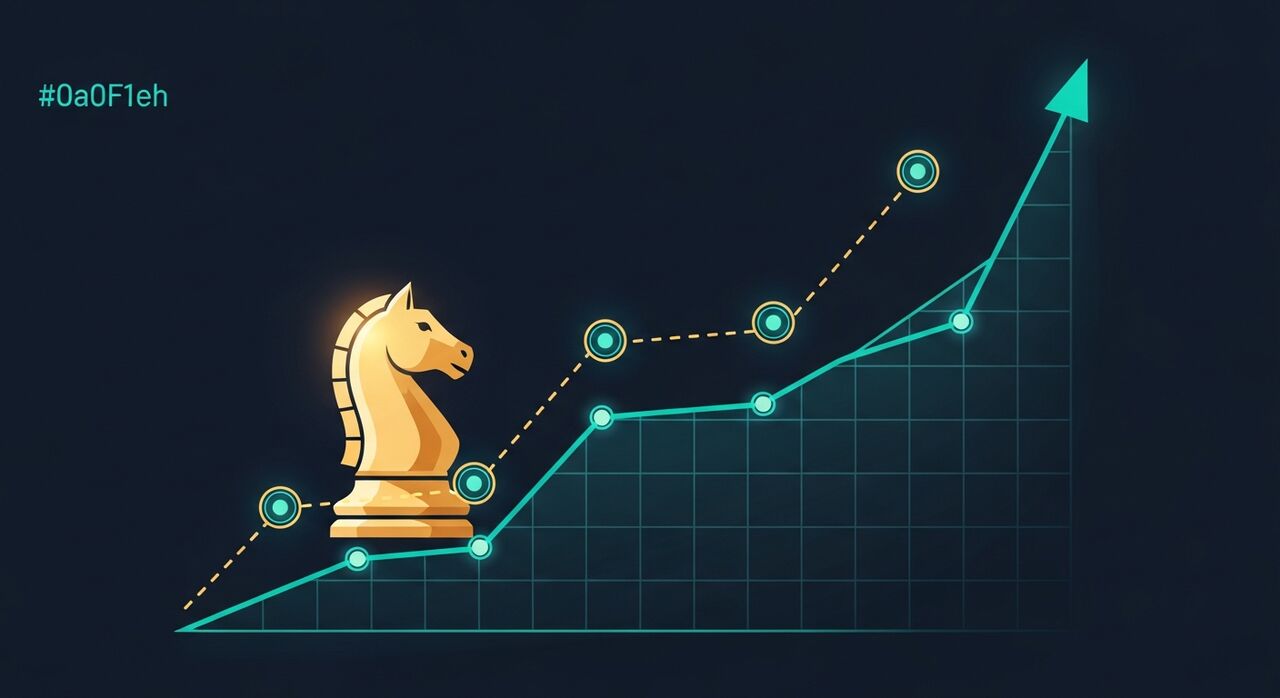
Dollar-cost averaging (DCA) is an investment strategy where you invest a fixed amount of money at regular intervals — say, $200 every month — regardless of what the market is doing at that time. When prices are high, your fixed amount buys fewer shares. When prices are low, it buys more shares. Over time, this results in a lower average cost per share than if you had tried to time the market, and it removes the emotional burden of deciding 'is now a good time to invest?' The answer, under a DCA strategy, is always yes — because you're investing on a schedule, not based on market conditions.
How Dollar-Cost Averaging Works: A Simple Example
Imagine you invest $500 per month into an S&P 500 ETF. In January, the price is $400 per share — you buy 1.25 shares. In February, the market drops to $320 — your $500 now buys 1.56 shares. In March, the price recovers to $380 — you buy 1.32 shares. Over three months, you've invested $1,500 and own 4.13 shares at an average cost of $363 per share. If you had tried to time the market and invested all $1,500 in January at $400, you'd own 3.75 shares. The DCA approach gave you more shares at a lower average cost — not because of any clever timing, but simply because the regular schedule automatically takes advantage of lower prices when they occur.
DCA vs. Lump Sum Investing: Which Is Better?
Research by Vanguard and others has consistently shown that lump sum investing (putting all your money in at once) outperforms DCA roughly two-thirds of the time, for a straightforward reason: markets go up more often than they go down, so money invested earlier has more time in the market. However, the advantage of DCA is not mathematical — it's psychological. Most people don't have a large lump sum to invest. They have a monthly income and can invest a portion of it regularly. For this majority, DCA is not a compromise — it's simply the most practical implementation of 'invest consistently over time.' Even for those who do receive a large lump sum (an inheritance, a bonus, or proceeds from selling property), DCA can be sensible if the psychological stress of timing a large investment would cause them to delay investing altogether.
The Psychological Power of DCA
The biggest enemy of the average investor is not market volatility — it's their own emotional response to market volatility. Studies by Dalbar consistently show that the average investor dramatically underperforms the index funds they invest in, because they panic-sell during downturns and chase performance by buying after rallies. DCA short-circuits this pattern. When the market drops 20%, a DCA investor who is automatically investing on a schedule actually benefits — they're buying more shares at lower prices. Instead of seeing a crash as a disaster, they can rationally see it as a sale. This reframe — from 'the market is crashing' to 'my regular purchase just bought more shares than usual' — is one of the most valuable mindset shifts in investing.
How Often Should You Invest? Weekly vs. Monthly
In theory, investing more frequently (weekly rather than monthly) slightly reduces your average cost variance — you're averaging more price points. In practice, the difference is minimal and the most important factor is consistency. Monthly investing aligns naturally with most payroll cycles, makes it easy to track, and reduces transaction costs if your broker charges per trade. For most investors, monthly automated investments are the sweet spot. Some brokers (including Fidelity, Schwab, and M1 Finance) allow you to set up automatic monthly investments into specific ETFs, making the entire process hands-off once configured.
DCA During a Bear Market
Bear markets — defined as a drop of 20% or more from a recent peak — are where DCA demonstrates its greatest advantage. During the COVID crash of March 2020, the S&P 500 dropped 34% in five weeks. An investor using DCA through that period bought shares at prices 20–30% below recent highs, then benefited from the equally rapid recovery. The index recovered all its losses within five months. An investor who panic-sold at the bottom locked in a 34% loss and likely missed the recovery. A DCA investor who simply continued their monthly contributions didn't have to make any decisions during the crisis — the strategy made the decision for them. This is the core value of DCA: it removes the opportunity for fear-based decisions at exactly the moments when fear is highest.
Implementing DCA: A Practical Step-by-Step Guide
Implementing dollar-cost averaging takes about 15 minutes to set up and then runs automatically. Step 1: Open a brokerage account if you don't have one — Fidelity, Vanguard, Schwab, or Interactive Brokers are excellent choices. Step 2: Choose your core investment — for most beginners, a broad market ETF like VOO (S&P 500) or VTI (total US market) is ideal. Step 3: Determine your monthly investment amount — even $50–$100 per month makes a meaningful difference over time. Step 4: Set up an automatic transfer from your bank account to your brokerage on payday, and an automatic investment into your chosen ETF. Step 5: Enable dividend reinvestment (DRIP) so any dividends paid by the ETF are automatically used to buy more shares. Step 6: Do not look at the portfolio value during market downturns — resist the urge to tinker. Review quarterly.
DCA and the Power of Compound Returns
DCA is most powerful when combined with long investment horizons, because of compound growth. An investor who invests $300 per month starting at age 25 into an S&P 500 ETF (assuming 10% average annual returns) would have approximately $1.9 million by age 65. The same investor starting at age 35 would have approximately $680,000 — a $1.2 million difference from just 10 fewer years of investing. The math is stark: the earlier you start and the longer you continue, the more powerful the compounding effect. DCA is the simplest implementation of this principle: invest regularly, reinvest all returns, and let time do the work.
Frequently Asked Questions
Does dollar-cost averaging actually work?
Yes — DCA works by removing the need to time the market and by automatically purchasing more shares during price drops. Research shows that while lump sum investing outperforms DCA mathematically about two-thirds of the time, DCA consistently outperforms investors who try to time the market. Its greatest value is psychological: it removes emotion from investing decisions and builds consistent long-term investing habits.
What is a good amount to dollar-cost average per month?
The right amount is whatever you can invest consistently without impacting your emergency fund or ability to pay bills. Even $50–$100 per month is meaningful over long time horizons. A common guideline is to invest 10–20% of your after-tax income. The most important factor is consistency — a smaller amount invested every month beats a larger amount invested sporadically.
What is the best investment for dollar-cost averaging?
Broad market index ETFs are ideal for DCA: they're diversified, have very low fees, and have strong long-term track records. The most popular choices are VOO or SPY (S&P 500), VTI (total US stock market), and VT (total world stock market). Avoid using DCA for individual stocks or highly volatile assets unless you have a specific, researched thesis — the diversification of an index fund makes it much more forgiving of unfavorable entry prices.
Can you dollar-cost average into cryptocurrency?
Yes — DCA is commonly used for crypto investing, particularly Bitcoin (BTC) and Ethereum (ETH). Given crypto's extreme volatility compared to stock markets, DCA is arguably even more valuable for crypto than for stocks, as it prevents buying an entire position at a market peak. Many crypto platforms offer automatic recurring purchases for exactly this purpose.
How do I dollar-cost average into an ETF?
To dollar-cost average into an ETF, pick a broad, low-cost fund (VOO, VTI, or SPY are common choices), then set up an automatic recurring purchase of a fixed dollar amount on a regular schedule — usually monthly on payday. Most major brokers (Fidelity, Schwab, M1 Finance) let you automate this, including fractional-share purchases so your full amount is always invested. Enable dividend reinvestment (DRIP) and let it run untouched. The whole setup takes about 15 minutes and then requires no ongoing decisions.
Simulate a DCA strategy risk-free
Use the compound interest calculator to project your DCA returns, then test it in the simulator.